Monocrystalline diamond powder
monocrystalline diamond (MCD) superabrasive powder
C
Advanced ceramic powders
Polishing and superabrasive powder inquiries. Match the abrasive identity, particle profile and workpiece before choosing a grade.
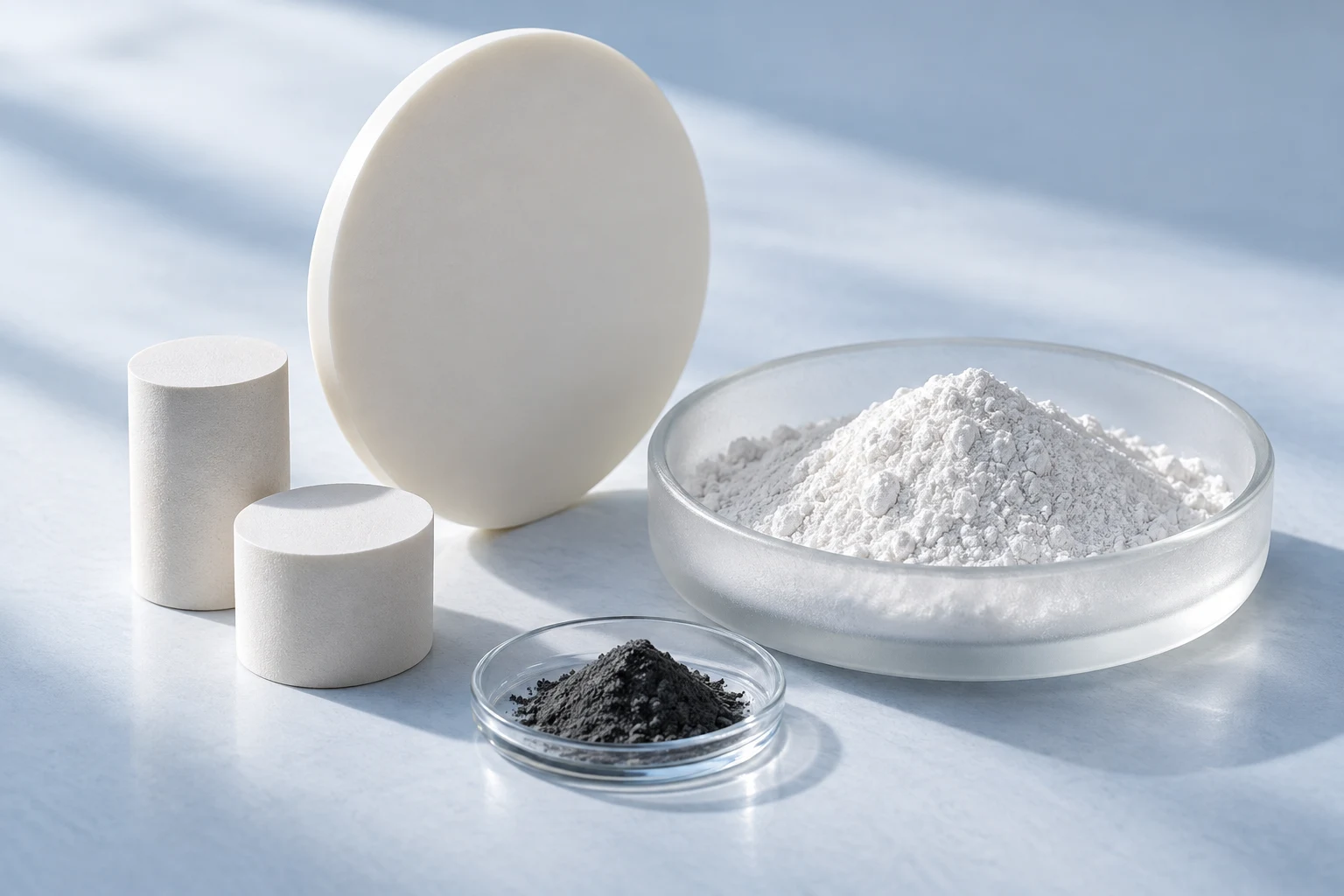
Separate monocrystalline, polycrystalline and nanodiamond requirements. Begin with the workpiece and target finish, then particle distribution and oversized-particle limits.
monocrystalline diamond (MCD) superabrasive powder
C
polycrystalline diamond (PCD) superabrasive powder
C
C
Choose ceria, alumina or silica against the workpiece and polishing process. Compare agglomeration, dispersion state and the conditions used to assess removal and finish.
cerium oxide (ceria; CeO2) polishing powder
CeO2
Al2O3
SiO2
Add materials to your inquiry, then review them before sending. Review inquiry (0)
Start with the material identity and process, then check the details on the proposed datasheet.
Distinguish monocrystalline/polycrystalline diamond, nanodiamond, CBN and oxide polishing powders. Keep the chemistry and structure explicit.
Specify the size range and distribution method, morphology, agglomeration and surface treatment needed by your tool or slurry.
Describe the substrate, removal/finish target and process. A nominal particle size does not determine scratch performance by itself.
No. c-BN/CBN is a different crystal structure and an abrasive material identity. The BN formula must be accompanied by the phase and intended abrasive grade.
Finished abrasives, grinding tools and prepared polishing compounds need separate supply briefs; they are not presented as dry powder here.
A material name or reference datasheet is enough to start. Add any requirements you already know.
Nike has no fixed minimum order. Tell us the quantity you need; we’ll check supplier pack sizes and any minimums.
We’ll check the proposed grade, sample options, delivery timing and available batch documents. Include any essential COA, TDS or SDS requirements.
Send a material request