View inquiry

Applications

Thermal & functional fillers

Filler powder sourcing for polymers, coatings and electronic packaging, centered on the matrix and the final formulation.

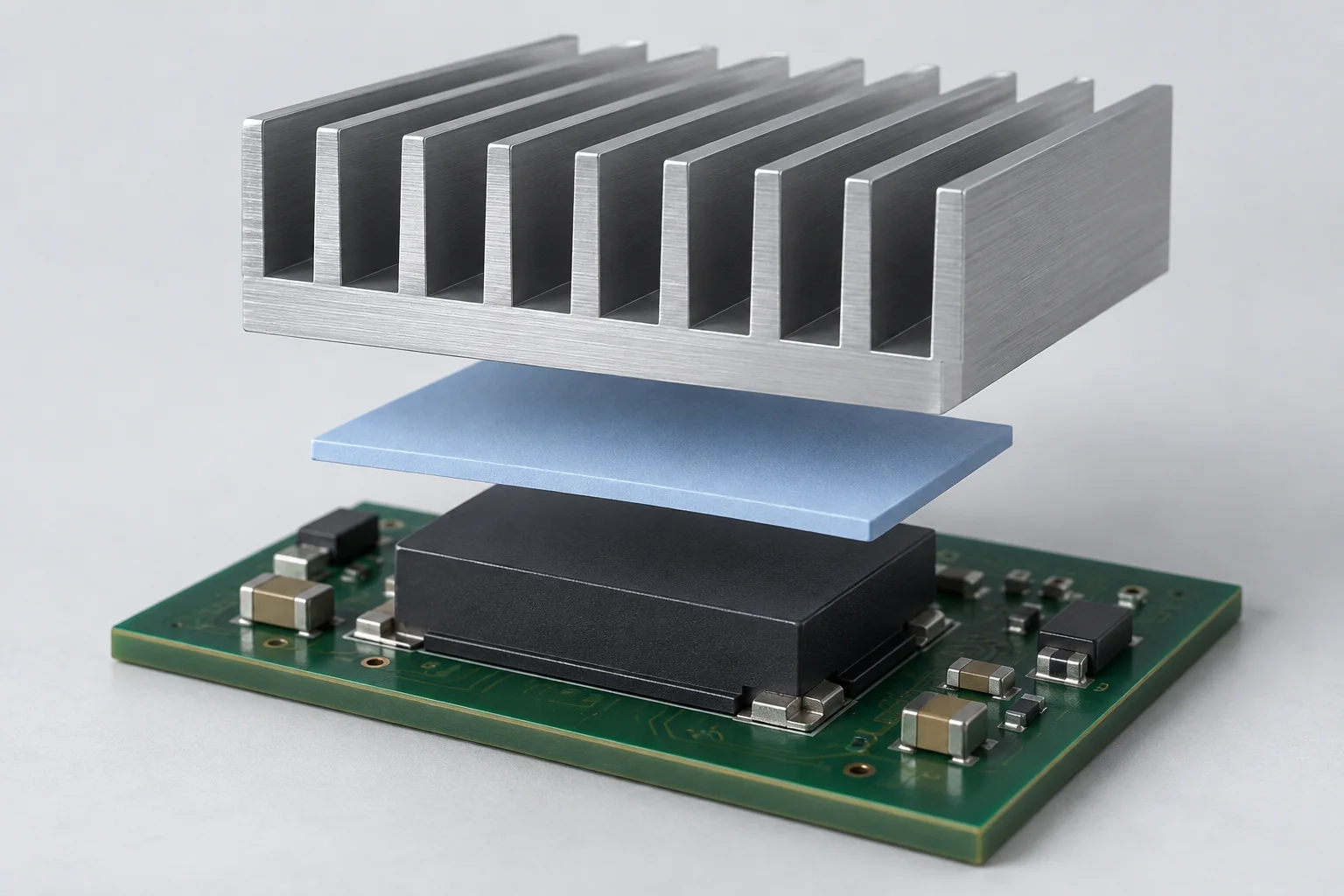
Heat sink, thermal interface pad and electronic package shown as an exploded assembly

Must the finished part stay electrically insulating?

This is the first useful split for a thermal-filler request. Then consider heat-flow direction and the way the resin is mixed.

Narrow your material shortlist
Your requirementStart by comparingWhat can change the choiceExplore materials
Electrical insulation is essentialAlumina, h-BN or an appropriate AlN fillerCarbon and metal fillers can create an electrical-conduction path. Start with insulating candidates and verify the finished compound.
Heat must cross a thin bond lineCompare platelet BN with an agglomerated BN gradePlatelets can orient during processing. Agglomerates offer a different architecture, but their structure may change during mixing.
Viscosity or packing limits the filler contentCompare particle-size blends and rounded alumina with the current fillerUse the same resin, treatment and solids basis. A powder thermal-conductivity figure does not predict finished-part performance.
Electrical conduction is also a goalGNPs, copper or another specified conductive fillerThis opens a different material path. Evaluate resistivity as well as thermal behavior after curing.
PlateletsOrientation matters
Rounded particlesSize blend and packing
AgglomeratesStructure after mixing
Particle-shape schematics, not microscopy or a size scale. Chemistry and powder architecture are separate selection criteria.

Start with the task closest to yours. The examples identify material requests; a proposed grade still needs to fit your process and evaluation.

Thermal-filler formulation

Use the filler identity and shape already required by your resin or host-material formulation. Compare treated, platelet, spherical and agglomerated forms separately.

Materials to explore

What changes the comparison

Keep powder content, particle-size blend, surface treatment and mixing/curing conditions with the final-part test.

Discuss this task

Electrical or conductive formulation

Begin with the intended electrical function and the material system permitted by your formulation. Elemental metals and doped oxides have different identities and analytical briefs.

Materials to explore

What changes the comparison

Assess the proposed powder in the actual host material; record resistivity method, powder content and processing conditions.

Discuss this task

Optical or appearance effects

Choose the effect mechanism first: pearlescent, temperature-responsive, light-responsive or fluorescent.

Materials to explore

What changes the comparison

Compare samples in the intended binder and curing process, with consistent viewing or activation conditions.

Discuss this task

Prepare a useful comparison

Here, the matrix is the resin or other host material; loading is the amount of powder added. State whether that amount is by weight or volume.

A reference datasheet or your existing material code is useful. If you are still exploring, describe what you are making and which result needs to change.
  • Host matrix, loading and processing conditions
  • Filler chemistry and surface treatment
  • Particle-size blend and morphology
  • Final-part test method and target conditions
Prepare an application inquiry

Find a material.

Search the full materials directory.

Open the full material directory